Las Manitas is a rock-art site associated with Santa Anita, in the countryside north of San José del Cabo. It offers a reason to look beyond the coast and consider the region’s cultural history. Begin with the setting and the surviving artwork, then confirm whether a visit is possible on your chosen date.
What is Las Manitas?
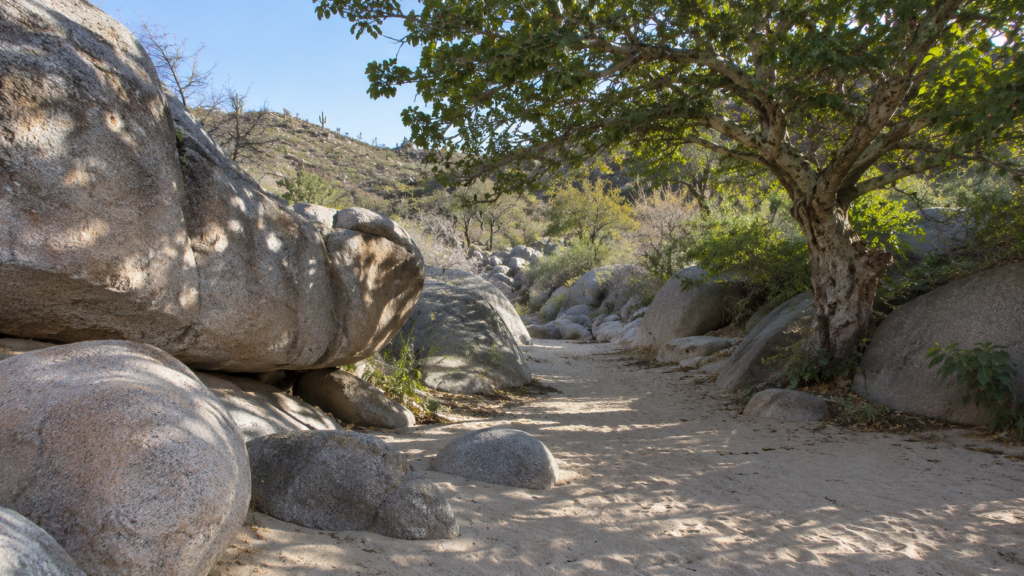
The Los Cabos Rural Guide identifies Las Manitas with Santa Anita. A first-hand account in Tendencia describes a large boulder with painted handprints of different sizes and long lines, near an arroyo setting. The appeal is a close encounter with marks left on the landscape, rather than a large museum-style attraction.
Use “Las Manitas, Santa Anita, Los Cabos” when asking about the place. Similar names appear elsewhere in Mexico, and information about a different archaeological site may not apply here.
How old is the rock art?
Visitor publications give differing accounts of its age and interpretation. The sources reviewed for this guide do not establish a reliable, site-specific archaeological date. We therefore do not assign an exact year or present a proposed ceremonial meaning as a settled fact.
If you visit with a guide, ask which observations come from archaeological research and which are local interpretations. A painted hand, an engraved design and a modern mark are not interchangeable. Looking carefully and discussing what is known can be more rewarding than attaching a dramatic story to every shape.
Confirm access before heading into the countryside
Earlier travel accounts describe an approach through the Santa Anita area, followed by a rural road and a walk to the rock. They do not confirm today’s road condition, entry arrangements or availability. Arrange the actual visit rather than relying on an old map pin or a past visitor’s fee.
| Ask about | What you need to know |
|---|---|
| Access on your date | Who confirms entry, any required arrangements and the permitted visiting area. |
| Meeting point and road | The current entrance, parking and whether your transport suits the final approach. |
| Walking demands | Steps, uneven ground, shade and whether the route fits everyone in your group. |
| Guide and charges | Who accompanies you, the duration and exactly what the agreed price includes. |
Save the agreed directions and contact details before leaving. Our rural day-trip checklist covers these preparations. If access cannot be confirmed, choose a different outing for that day.
Look without changing the surface
Keep hands, bags and equipment away from decorated rock. Do not wet, rub, trace, chalk or try to clean a mark to make it clearer. Follow the site’s current photography and access instructions, and avoid climbing on the rock for a closer view. Leave stones, objects and vegetation where they are.
A photograph should record the visit without changing the place. Stay on the permitted approach, give other visitors space and take your rubbish away. Ask the guide where to stand if the viewing area is small or the ground uneven.
Choose the kind of cultural day you want
For a different historical setting, our churches and mission heritage guide compares village churches and Santiago’s mission history. Rock art and mission-era buildings belong to different parts of the region’s past; choose an outing for the history you want to understand.
Explore more village and countryside options through Rural Los Cabos, or browse places in the At Los Cabos app while planning your stay.
Sources: the Los Cabos Rural Guide, printed pages 24–29, and Tendencia’s Las Manitas field account. The Tourism Board also includes Las Manitas in its regional archaeology overview. Current access, entry charges and guide availability have not been independently confirmed.