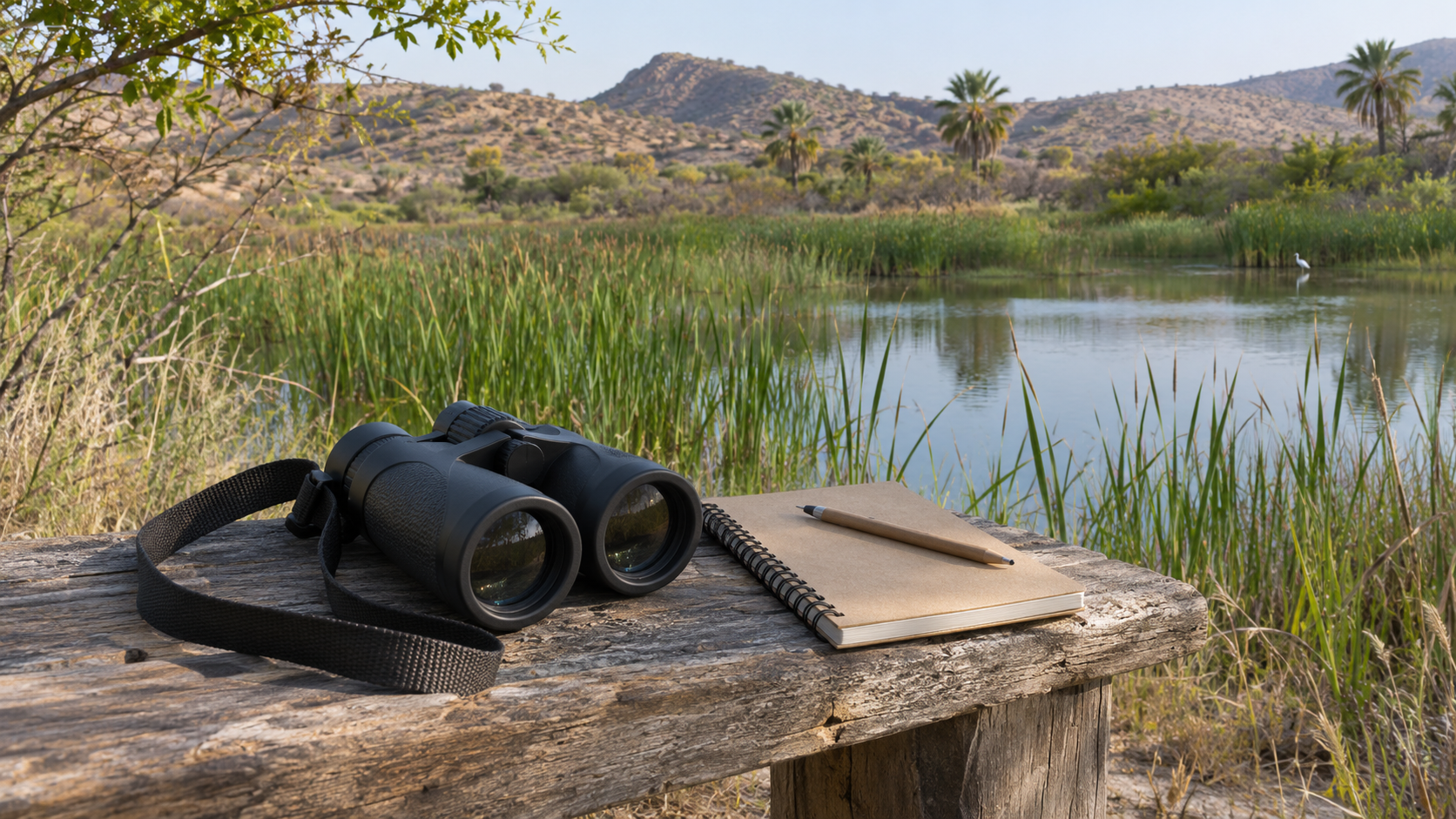
Illustration of binoculars beside a Baja wetland.
For a first birdwatching trip to Los Cabos, use binoculars you can hold comfortably and focus quickly. Before buying a pair for the holiday, ask your guide whether suitable optics are included. Familiar equipment used well is more useful than extra magnification you struggle to keep steady.
Understand the two numbers
In a description such as 8×42, the first number describes magnification and the second the objective lens diameter in millimetres. Compare the view and the weight together. A larger number does not automatically mean a better choice for walking or for finding a moving bird.
Cornell Lab’s buying guidance compares 8× and 10× models and emphasises trying equipment. For many beginners, 8× is a sensible starting point to test. Someone watching distant shorebirds may prefer another option, but the choice should reflect the actual outing and what feels usable.
Find birds before chasing detail
A wider field of view can make it easier to locate a bird when bringing binoculars to your eyes. Practise looking at a fixed object first, then raising the binoculars without shifting your gaze. This simple test helps reveal whether you can find the subject comfortably.
Stop walking before looking through the lenses. At a wetland, choose a stable position on the permitted route and let the birds move into view. Our beginner birdwatching guide covers a first outing without requiring specialist equipment.
Check fit before the trip
Try the focus wheel with the hand you will use, adjust the spacing until the view forms one clear image, and check comfort with your glasses if you wear them. Follow the manufacturer’s instructions for eyecups and individual adjustment.
Hold the binoculars for more than a few seconds. Imagine carrying them alongside water and a day bag. A lighter pair may suit a relaxed holiday outing better than equipment chosen only by its specification sheet.
Ask what the guide supplies
Confirm whether binoculars are provided individually or shared and whether the group uses a spotting scope. Mention children, glasses or any difficulty holding equipment. A shared scope can help with a distant view, but it does not mean every participant has binoculars throughout the walk.
Ask about the condition and adjustment of loan equipment before deciding to leave your own at home. For an independent outing, check that you have covers and a comfortable strap, and keep the equipment protected during transport.
Care matters on coastal outings
Follow the maker’s cleaning instructions rather than wiping gritty lenses with a shirt. Keep caps and a clean storage bag available. Avoid placing optics on wet sand or treating a water-resistant description as permission to immerse them.
Return to our Los Cabos birdwatching guide for settings and responsible bird photography guide for watching with a camera. If walking distance is a concern, see planning birding with limited mobility.
Find more places and activities in the At Los Cabos app.
Sources
Optics guidance: Cornell Lab’s binocular selection tips and field-of-view explanation. These inform equipment choice, not a promised view at a Cabo site.