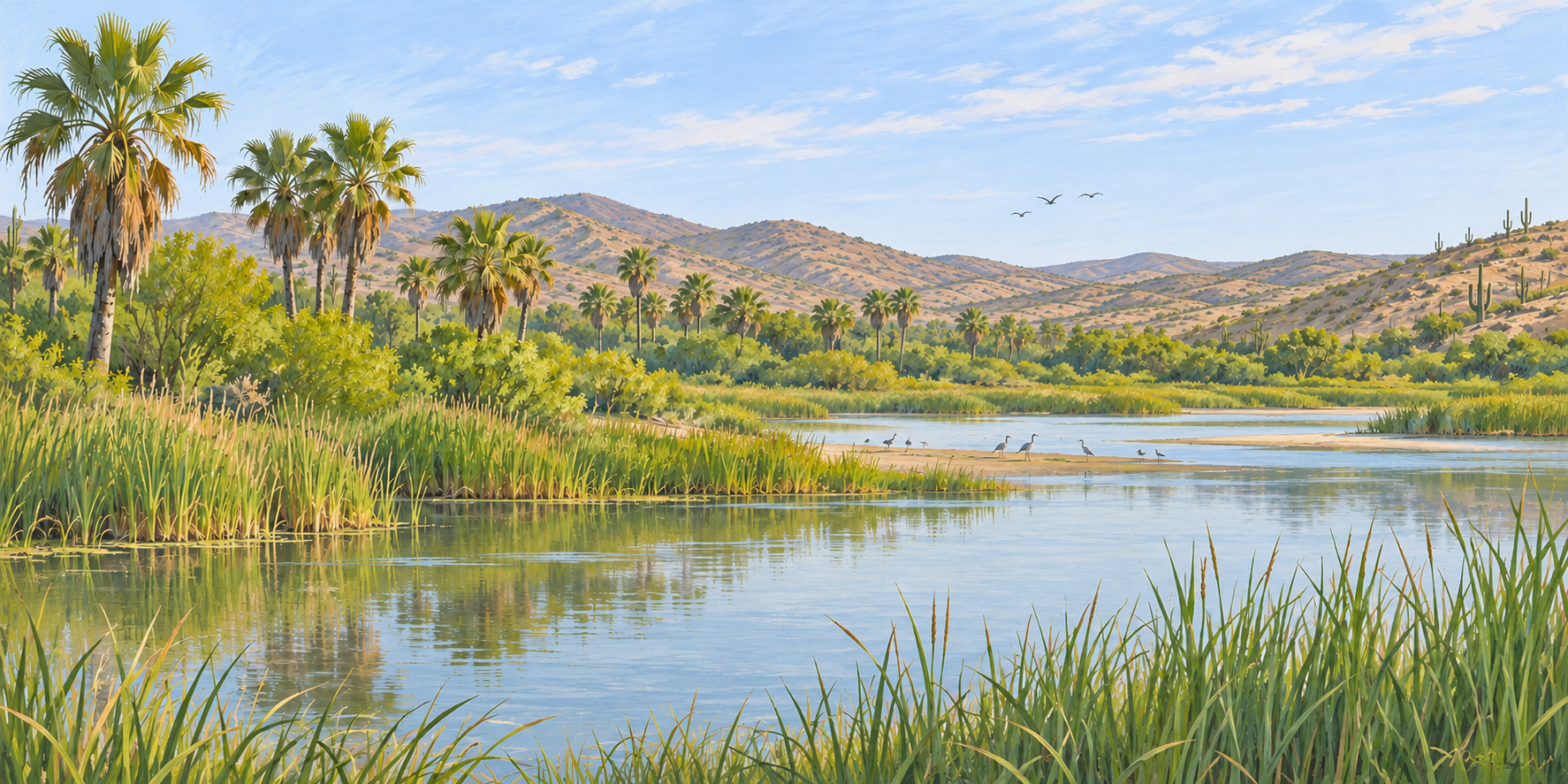
Illustration of a Baja wetland and its birds.
Plan bird photography in Los Cabos around observing natural behaviour from a suitable distance. A feeding bird that carries on undisturbed is a better subject than one repeatedly driven from its resting place. Choose an outing that allows patient stops and respects local access.
Tell the guide your photographic aim
A general birding walk and a photography outing may move at different speeds. Explain whether you want identification photographs, landscape scenes with birds or longer time with a telephoto lens. Ask whether the proposed schedule allows those pauses.
Discuss group size and equipment space without assuming that a private booking allows closer approaches. Our birdwatching tour guide helps compare the actual itinerary. Begin with our Los Cabos birdwatching overview if you are still choosing a habitat.
Use the subject’s behaviour as your limit
Audubon’s ethical photography guidance puts the bird’s welfare ahead of the picture. Use a long lens, allow space and back away when your approach changes the bird’s behaviour. A bird that freezes or becomes alert may be disturbed even if it has not flown.
Do not repeatedly approach a bird to make it fly for an action shot. Watch feeding, resting and movement from where you are permitted to stand. Accept a wider composition or no photograph when getting closer would interrupt the animal.
Be especially cautious around nests
Keep away from nests and young birds, respect barriers and avoid clearing vegetation to improve the view. Do not disclose sensitive nest locations in a public photo caption. Remove location data when sharing an image could lead others to a vulnerable bird.
Avoid using playback to draw birds toward the camera. Audubon advises against it because a perceived rival or predator can interrupt essential behaviour. Leave drones out of a bird-photography outing rather than treating them as a way to approach from above.
Prepare equipment for patience
Choose a camera and lens combination you can carry comfortably. Practise focus and exposure controls before the outing so you spend less time searching through menus. Take a few identification frames when useful, then put the camera down and watch.
Our binocular guide explains equipment that can help locate distant birds without moving closer. Ask the guide before setting up a tripod where it might block a narrow path or another participant’s view.
Choose respectful photographs to share
A wide habitat image, a bird seen from a lawful route and a short account of its behaviour can tell a useful story without an intimate close-up. Caption uncertain identifications honestly. Do not turn a location you could access once into a promise that readers may enter it at any time.
For a slower outing with access needs, see birdwatching with limited mobility. Discuss the actual viewing position and transport before planning equipment around it.
Find more places and activities in the At Los Cabos app.
Sources
Field ethics based on Audubon’s ethical bird photography guidance, reviewed in November 2026. Confirm site permissions with the relevant host or manager.