
Yes, swimming may be possible at Lovers Beach on the Cabo San Lucas Bay side when conditions allow. That does not mean it is suitable every day or for every swimmer. Do not swim at neighbouring Divorce Beach on the Pacific side.
For the beach’s location, facilities and overall visit plan, see our Lovers Beach guide.
Which Side of Lovers Beach Is Swimmable?
The bay-facing beach, Playa del Amor, is the side commonly used for swimming and snorkeling. It is more sheltered than the Pacific-facing shore, but swell, currents and boat movements still need attention.
The other side is Divorce Beach. Our comparison of Lovers Beach and Divorce Beach explains the contrast. Similar names and a short sandy connection do not make their swimming conditions interchangeable.
Check Conditions Before Entering
Ask the captain or local safety staff about the swimming area, warnings and current conditions. Follow posted signs and beach flags when present. Do not interpret the absence of a flag as an assurance that the water is suitable.
Do not rely on lifeguard supervision being available at this remote beach. Choose an outing with appropriate guidance if you need instruction or help assessing the site.
A sunny day or a morning departure does not guarantee calm water. Stay out if swimming is prohibited or conditions exceed your ability.
Keep Clear of Water Taxis

Boats bring people to and from Lovers Beach, so watch the landing area and follow local directions about where to swim. Remaining close to the sand or rocks does not necessarily keep you away from vessels.
Do not swim towards a moving boat or cross its approach. When returning to your own boat, follow the crew’s instructions for approaching and using the ladder.
Snorkeling from the Beach
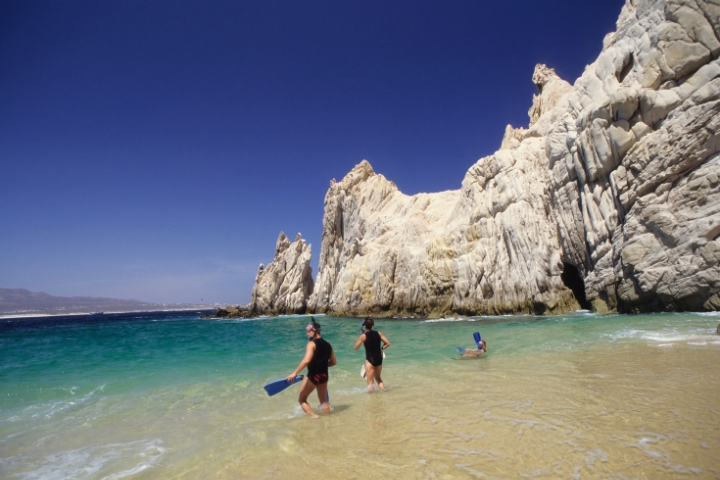
Bring a mask and snorkel or confirm that equipment is included in your outing. Check the fit and ask for instruction before setting off if you are unfamiliar with the gear.
Nearby dive-site names such as Pelican Rock and Neptune’s Finger do not mean you should swim between them independently. Let a guide select an appropriate route and activity area.
Observe fish without touching or feeding them. Avoid standing on reef habitat or climbing the surrounding rocks.
Children and Less-Confident Swimmers
Children need close, active adult supervision. Tell the operator about swimming experience and ask about correctly fitted flotation and in-water guidance.
Flotation does not make rough water acceptable or replace supervision. If someone is not comfortable in the water, a boat sightseeing visit can provide the scenery without a swim.
Know Your Limits and Your Way Out
Stay with a partner and agree how to signal that you need help. End the swim and alert the guide or companion if you feel tired, cold or uncomfortable.
Before entering, identify the exit point and the return pickup arrangements. Avoid alcohol before swimming and bring drinking water and sun protection for the beach stay.
Do Not Swim Around the Rocks to Reach the Beach
If a coastal route is interrupted by water, do not assume a short swim will complete it. Our walking-access article distinguishes the reported scramble from normal visitor access.
Swimming at a suitable part of the bay-facing beach is different from swimming towards the Arch, rounding the headland or entering the Pacific surf. Keep those activities separate when planning your visit.