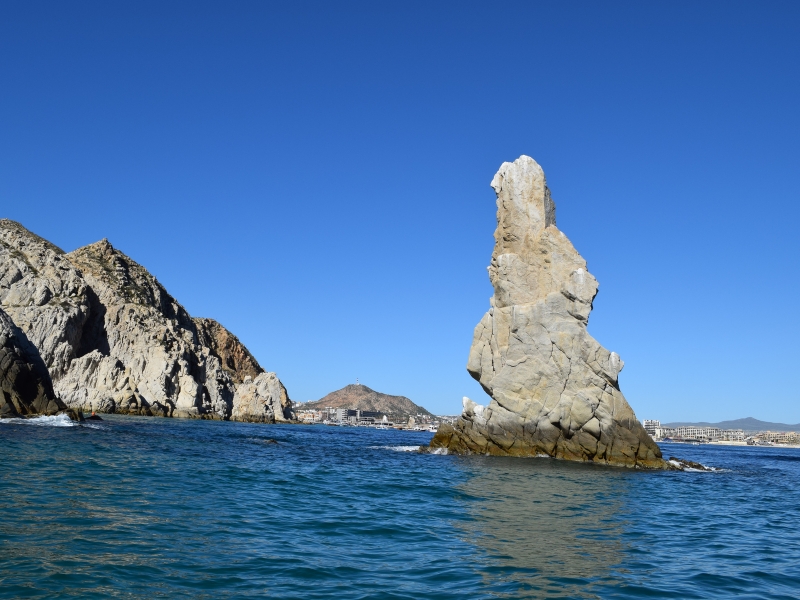
Neptune’s Finger in Cabo San Lucas Bay
Neptune’s Finger is a finger-shaped rock pinnacle near Lovers Beach in Cabo San Lucas Bay. It is a recognizable sightseeing feature above the water and a named dive setting below it. It belongs to the Cabo San Lucas setting, not the separate Cabo Pulmo reef system on the East Cape.
The Cabo San Lucas Bay overview gives the location in relation to the marina and other landmarks. A boat view of the rock and a dive around its underwater features involve different planning and requirements.
Location and access
Use the map to identify the bay-side location, not as a navigation or independent-entry plan. Many guided dives depart from the marina by boat. Confirm the meeting point and the actual site with the provider, since the guide may choose a different location around the conditions and group.
The rock is often described by its height above water or by the depth of nearby walls, which are different measurements. Neither figure is needed to enjoy the landmark, and neither establishes an appropriate dive depth for a visitor.
What is underwater?
The site has rock pinnacles, shallow features and steep slopes, with fish and smaller marine life to observe. Sand falls can occur along nearby underwater slopes. The visible rock, dive route and sediment cascade should not be treated as one identical point or a guaranteed observation on every visit.
Fish, eels, small invertebrates and seasonal passing wildlife can interest divers and photographers. Exact sightings vary. Do not plan an encounter with turtles, rays or whale sharks from a promotional species list, and do not pursue an animal to improve a photograph.
Choosing a suitable dive
Discuss your certification, recent diving, comfort with buoyancy and the conditions you have experienced. The guide should choose the site, maximum depth and route within the group’s training and limits. A wall continuing into deep water is background topography, not a target to descend to its bottom.
The original description mixed shore, boat, drift and wall diving as if all were interchangeable options for every visitor. Ask about the specific outing you are booking: how you enter, where you swim, how depth is controlled and how you return to the boat. Do not assume direct shore access is open or suitable for beginners.
For the wider rules and habitat context, read the Cabo San Lucas Marine Reserve visitor guide. The operator should explain current access and any applicable park arrangements before you enter.

Sand Falls video and setting
Video credit: Manta Scuba. The retained video illustrates the underwater sand-fall setting; it is not a live condition report or a promise that a particular dive will see an active cascade. The Sand Falls guide explains the phenomenon and the distinction between viewing a shallow section and the much deeper canyon below.
Snorkeling or seeing the rock from a boat
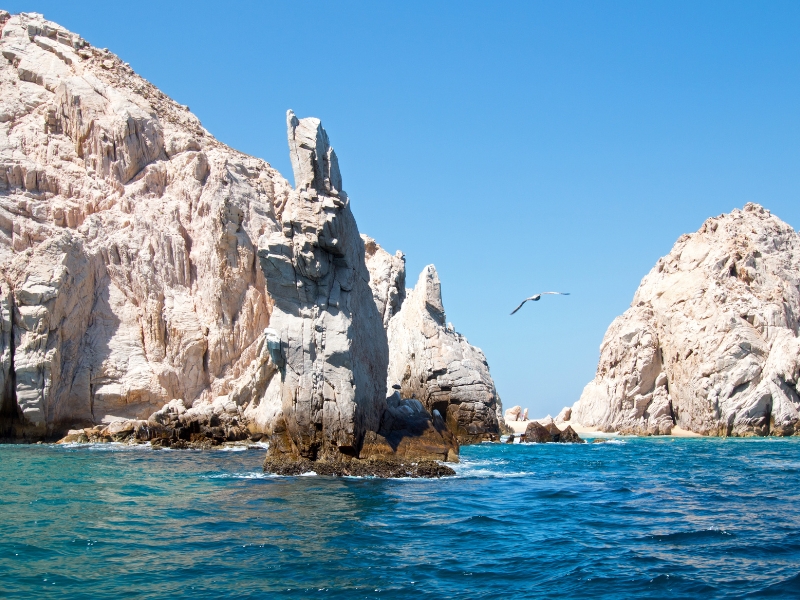
Snorkeling is a separate activity from following a wall dive. Ask a qualified local provider whether a suitable permitted area and conditions are available for your group. Do not swim out from Lovers Beach or across boat traffic simply because the landmark looks nearby.
A sightseeing outing can provide a view of Neptune’s Finger without entering the sea. Confirm the route and follow the crew’s chosen distance from rocks and wildlife. Kayak or paddleboard availability does not make an independent approach appropriate for every visitor.
Photography and conservation
Different light and viewing angles bring out the pinnacle’s shape above water. Underwater, keep control of yourself and your equipment before focusing on a camera. Do not settle on living surfaces, touch animals or disturb sediment to create an effect.
Choose an authorized provider, follow the briefing and accept a changed site when conditions or restrictions require it. The appeal is the bay’s actual landscape and marine life, not a guarantee of perfect visibility, a fixed wildlife list or one universally suitable dive profile.